Emergency mobile welding intake
Emergency welding requests need clear triage. The fastest response usually comes from giving the provider the facts they need before calling back.
Phone intake is being connected. Email intake is open for job details and callback coordination.
Send the welding details a provider needs before driving out.
Use the request page for trailers, equipment, farm repairs, gates, railings, aluminum work, brackets, and urgent on-site metal repair around Belleville.
- Photos of the full item, damaged area, and worksite access.
- Material notes for steel, stainless, aluminum, or unknown metal.
- Location, urgency, safety risk, and whether the item can move.
What to know before requesting help.
When it may be urgent
Urgency can come from blocked work, unsafe equipment, a damaged trailer, a broken gate, a commercial access issue, or a failed part that stops production. Safety still matters more than speed.
Voicemail script
Say your name, phone number, Belleville-area location, what broke, whether anyone is at risk, whether the item can be moved, what material it appears to be, and whether photos are available.
Availability note
Emergency and same-day work depends on provider availability, job type, travel distance, weather, and whether the repair can be done safely. No repair should be assumed until the job is reviewed.
How to make the request easier to review
Keep the message specific. Name the item, what failed, where it is located, what material it appears to be, and whether the part is safety-sensitive. Photos and measurements often matter more than a long explanation.
If the work area is hard to access, say so early. Farms, commercial yards, roadside trailers, tight driveways, gravel lots, weather exposure, and nearby combustible material can all affect whether mobile welding is practical.
When mobile welding may not be the right fit.
Some repairs need shop fabrication, replacement parts, inspection, engineering review, or a controlled work area. Thin aluminum, contaminated metal, cracked load-bearing parts, road-safety trailer components, and commercial guardrails should be reviewed carefully before anyone promises a weld.
Use the request form to describe the problem accurately. The callback can then confirm whether the job is likely to be mobile repair, shop work, replacement, or something that requires a different specialist.
Internal linking path
Emergency request triage.
Emergency mobile welding pages should not promise instant dispatch. The better conversion path is fast triage: location, safety risk, job type, material, access, photos, and whether the item is blocking work.
The voicemail script and form should make the first callback productive. A concise emergency request is easier to route than a vague message that only says welding is needed as soon as possible.
Evidence to include
- What broke and where
- Safety risk or blocked work
- Can the item move
- Photos ready for callback
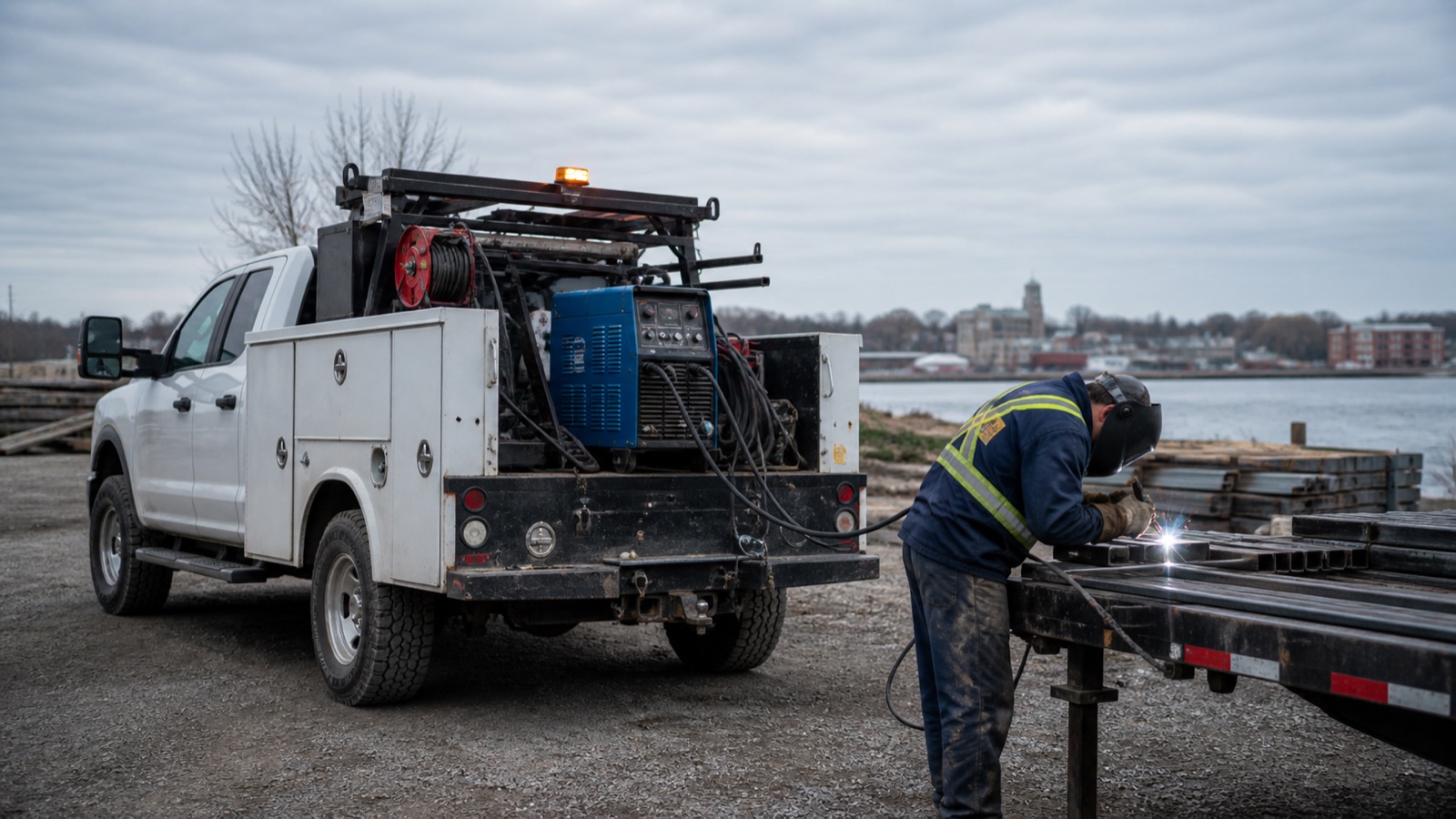
Emergency pages should convert urgency into useful triage.
Future urgent-request proof should capture what was blocking work, whether the item could move safely, the service area, and the details that made the first callback faster.
Ready-to-review request path.
The current public path is email intake while phone routing is being connected. After an approved Canadian voicemail number is added, calls can route to voicemail first and later to an approved provider only after Simon approves the handoff.
Current contact status
- Email intake: open at info@easybusinessautomation.ca.
- Phone intake: not connected yet.
- Provider dispatch: not active until approved.
- Lead quality log: should start when calls or forms arrive.
Why job details matter.
Mobile welding is not one uniform job. A trailer frame, a farm gate, an aluminum part, a bucket crack, and a commercial handrail can require different equipment, preparation, and review before work starts. Specific request details make the callback faster and reduce wasted trips.
Built for real welding requests.
A useful mobile welding request starts with the facts a welder needs before they drive to the job: what broke, where it is, what material it is, whether it is safe to access, and how urgent the repair is. This site is structured around those practical decisions instead of a generic contact box.
For Belleville and the Quinte region, the most common requests are trailer repairs, farm equipment, heavy equipment parts, gates, railings, brackets, aluminum pieces, and small on-site fabrication. Each service page explains what to send before a callback so the request can be sorted quickly.
Professional request standards
- Clear Belleville-area location and access details.
- Photos showing the full item, close-up damage, and working area.
- Material notes for steel, stainless, aluminum, or unknown metal.
- Urgency, safety risk, and whether the item can be moved.
- No repair promise until a qualified provider reviews the job.